There are events, and then there are events.
I have been to a lot of them. 149 to be precise - conferences in 14 countries, user groups in basements and ballrooms, and community meetups that smelled faintly of pizza and ambition. Most of them are good. Some of them are great. A very small number of them have something that I can only describe, for lack of a better word, as soul.
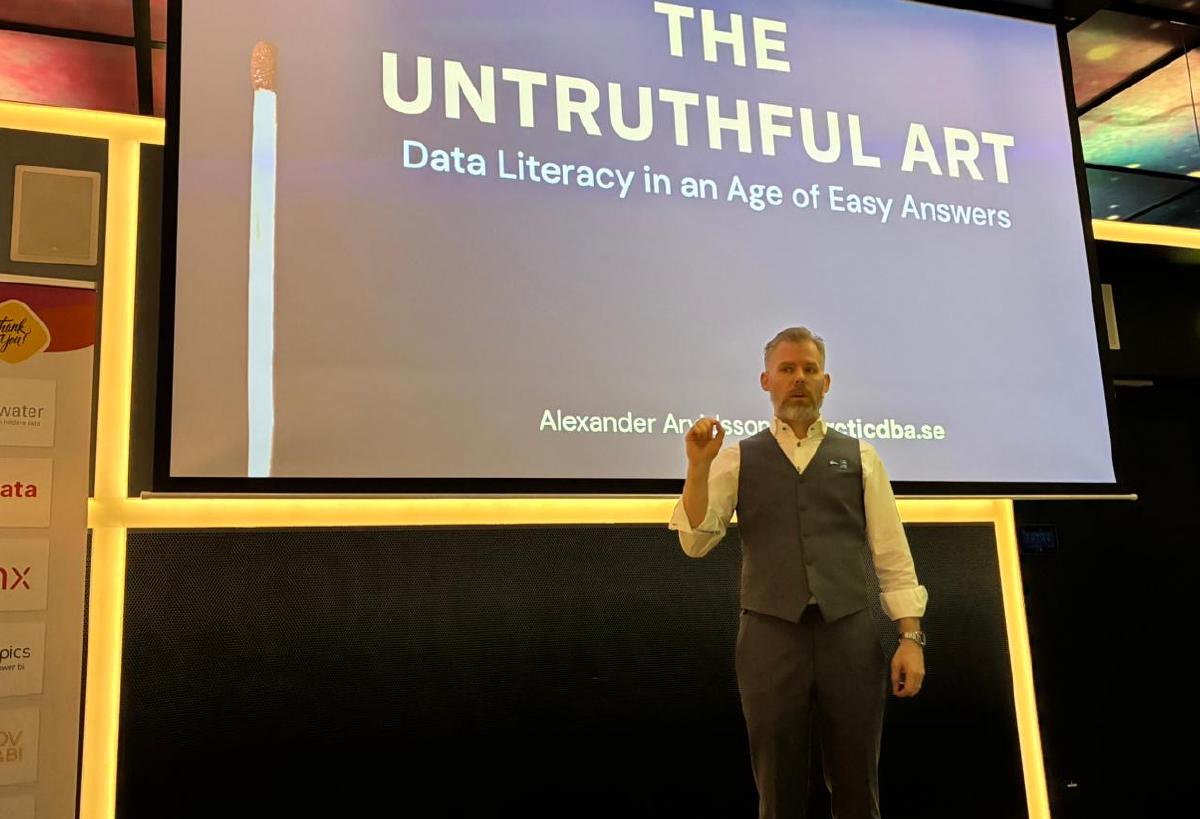
I just got back from three days at Power BI User Days in Utrecht, the Netherlands. And it has soul in spades.
The obvious things are all there. Fantastic speakers. An engaged audience. A venue that doesn’t feel like a forgotten wing of an airport hotel. Food that, despite being Dutch cuisine, goes beyond the catering industry’s eternal triangle of mystery meat wraps, limp salad, and lukewarm, atrociously bad coffee. But those things explain a good event. They don’t explain the energy I felt walking into the venue on day one - the kind of hum you notice in your chest before you can articulate what’s causing it. I have felt it at maybe four or five events over the course of my career. It’s not manufacturable. Either it’s there or it isn’t, and no amount of swag or production budget makes it happen.
Power BI User Days has it. I don’t fully know why. But I have a theory.
Something Wicked This Way Comes #
I noticed a pattern this time around that I don’t think I’ve seen quite so clearly before.
People aren’t asking how to do things anymore. Not as much as they used to, anyway. The sessions that generated the most energy - the ones where hands shot up and conversations bled past the Q&A slot - weren’t the ones explaining how to build a lakehouse, how to write a DAX measure, or how to structure a notebook. They were the ones wrestling with when to use what, and why, and what that means for a specific situation someone is actually in right now.
That’s a different question. A much harder one to answer, and a much more interesting one to ask.
My read on why this is happening: Power BI is, for the first time since its inception, plateauing in terms of new users. For years the community grew by roughly 50% annually - which sounds like a triumph until you realize what it means for the audience composition. A perpetually half-new audience is perpetually asking foundational questions. There’s nothing wrong with that. But it does mean the more experienced voices in the room are perpetually recapping chapter one.
That seems to be changing. The new-user flood hasn’t dried up, but the waterline of collective maturity has risen. And I suspect there’s a second force at work too: LLMs have quietly eaten a large part of the “how do I do this specific thing” market. If you can describe your problem in plain language and get a working answer back in thirty seconds, you stop going to conferences to learn syntax. You go to figure out what problem you should even be solving, and why, and what good looks like on the other side.
Which means, if I’m reading this right, the community is finally ready for the conversation I’ve wanted to have for years.
Better Late Than Never #
I keep saying - probably more than people want to hear - that you can’t Google the why. You can find out how to create a star schema in about forty-five seconds. You cannot find out, with anywhere near the same ease, whether you should be creating a star schema here, for this business, with these constraints, for these users, with this data culture. That requires thinking. It requires context. It requires someone to push back on your assumptions rather than just answer your question.
I’ve leaned into the how and the why in my sessions for several years now. I believe in it. I also believe it has cost me abstract acceptance rates - there will always be a larger audience for “Introduction to X” than for “Why Your Approach to X Is Probably Wrong”. The what sessions have volume on their side. They always will.
But Utrecht felt different. The questions people asked after my sessions, the hallway conversations, the way topics that usually get polite nods instead generated actual debate - all of it pointed at an audience that has done the homework and is now trying to figure out what to do with what they know.
There will always be room for foundational content. I have nothing against it. Every community needs an on-ramp.
I just hope we’re building more of the road beyond it.
If Utrecht is any indication, the appetite is there. The curiosity is there. The maturity is there.
Now we just need the sessions to catch up.
Join the Conversation #
What are you looking for at conferences and in workshops? I’d love to hear what your decision tree when choosing what to attend look like - whether you’re a seasoned conference attendee or someone who just went to their first event. Find me on LinkedIn or BlueSky.